
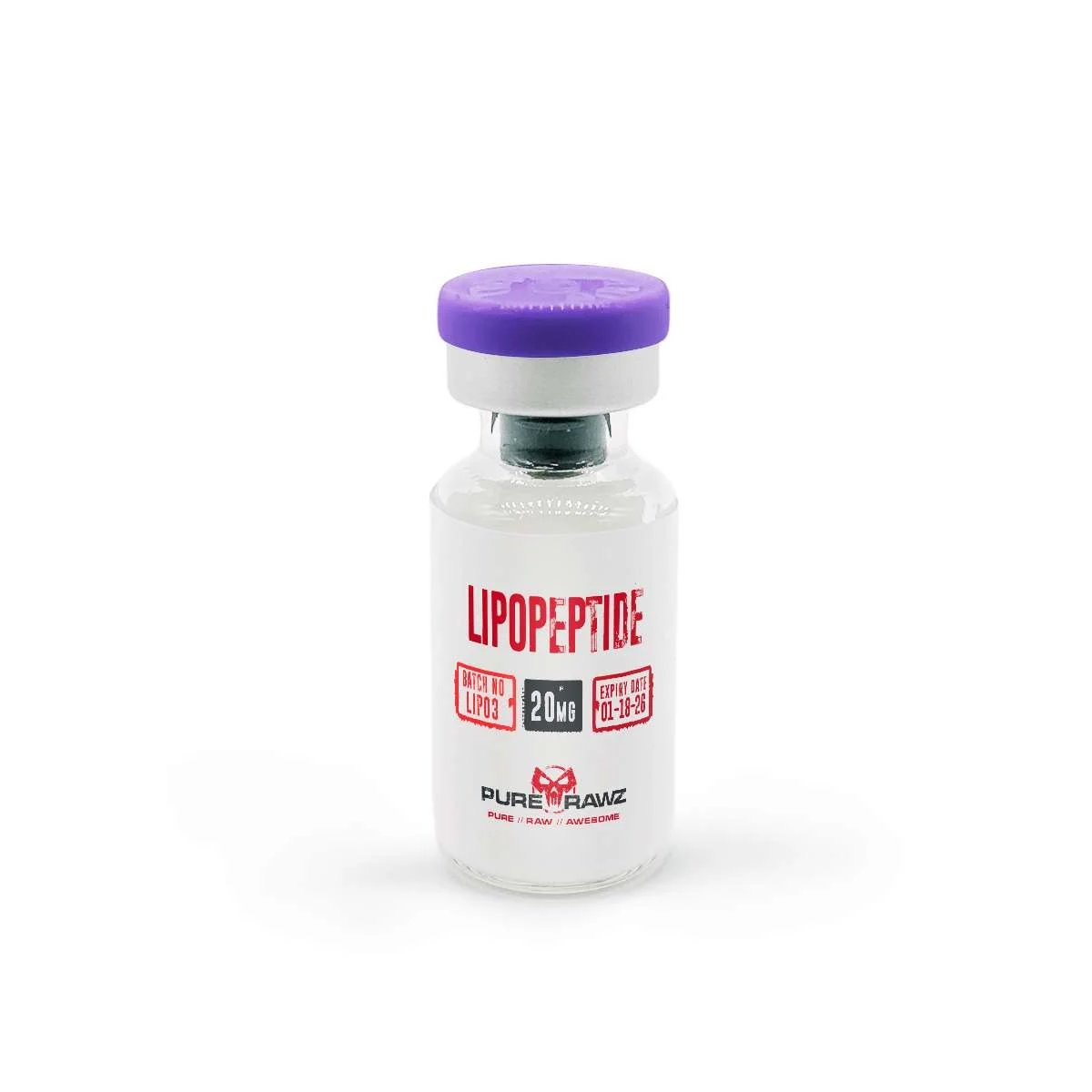
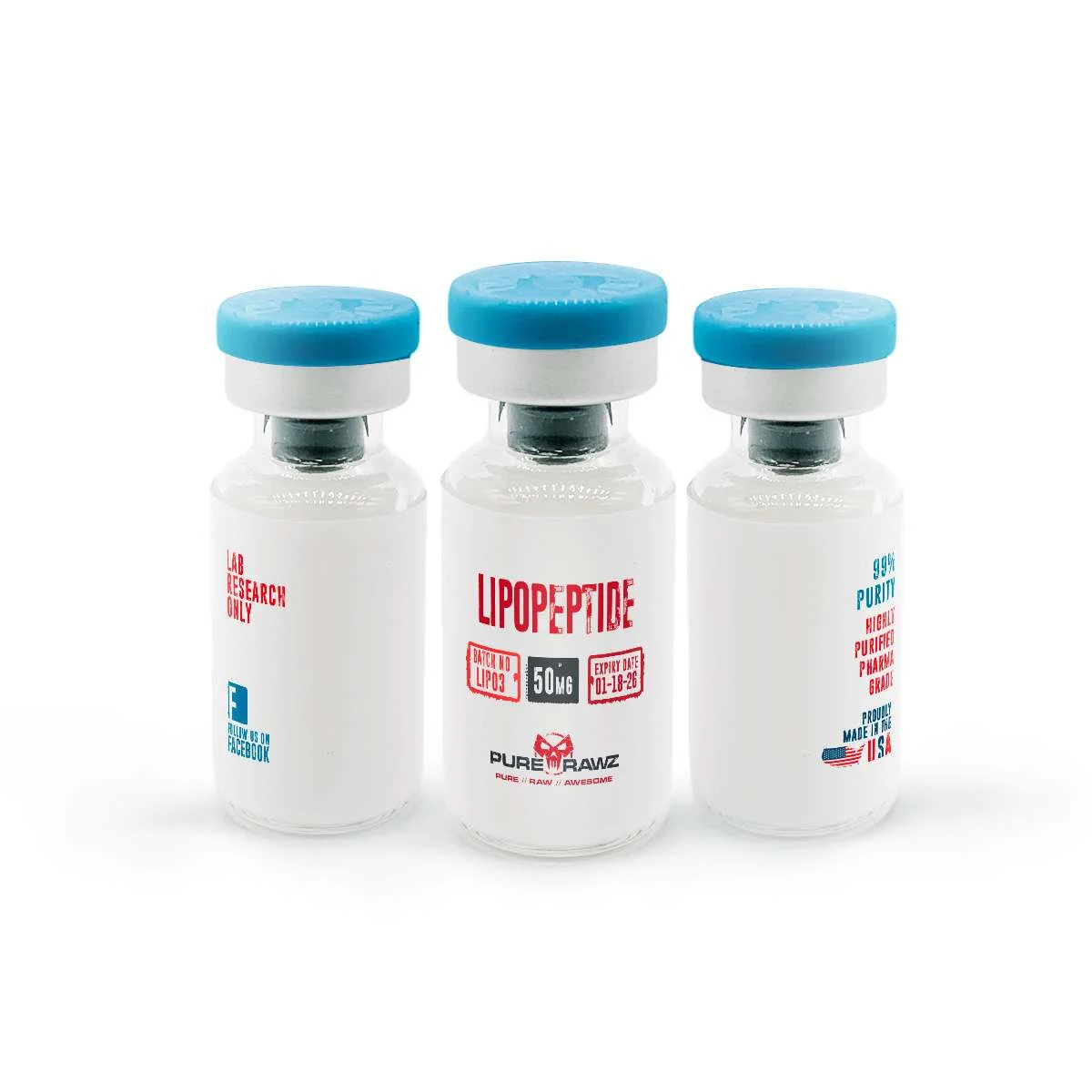
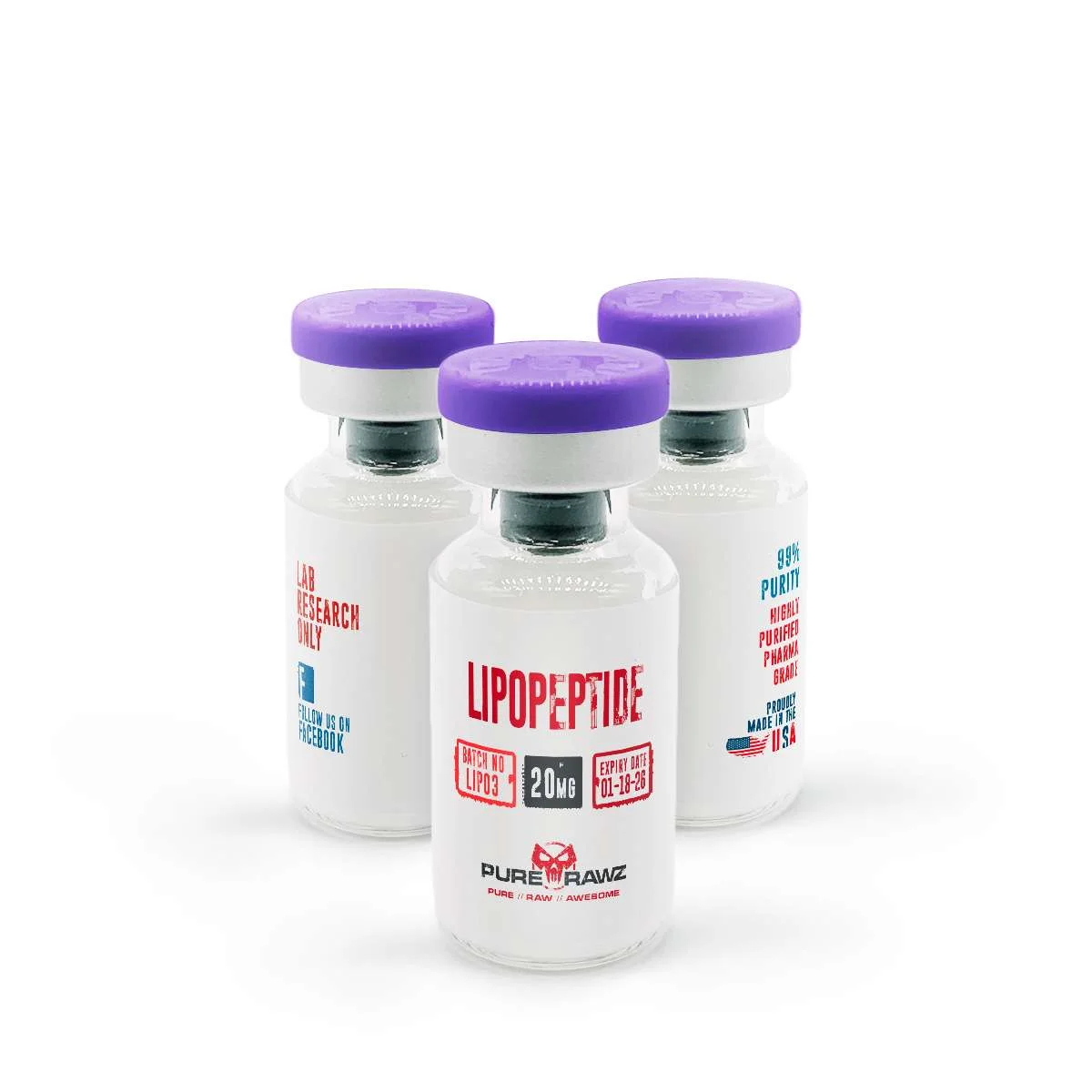
Lipopeptide

Price range: AUD25 through AUD55
 15 sold in last 8 hours
Lipopeptide refers to a broad class of research compounds in which one or more peptide chains are covalently conjugated to a lipid (fatty acyl) moiety. This lipidation strategy is widely used in peptide chemistry to alter membrane affinity, self-assembly behaviour and stability, and is supplied here strictly as laboratory reference material for research use only.
Research Background
Lipopeptides occupy an important niche in structural and biochemical research because the attached acyl chain changes how the peptide portion partitions between aqueous and membrane environments. This amphipathic character has been investigated in the context of membrane interaction studies, self-assembling nanostructure formation and carrier-molecule design, where the lipid tail is used as a handle to modulate half-life and localisation.
In in vitro systems, lipopeptide scaffolds are studied as model compounds for probing how acylation influences receptor engagement, aggregation and surface activity. Because the term encompasses many distinct sequences, the specific research role of any given lipopeptide is defined by its peptide portion; this listing is characterised at the level of its lipopeptide class rather than a single named biological target.
Lipopeptide Specifications & Handling
- Purity: ≥99% as determined by analytical testing.
- Analytical verification: third-party reversed-phase HPLC and mass spectrometry, with a batch-specific certificate of analysis (COA) available.
- Physical form: lyophilised powder.
- Storage: store cool and dark; keep lyophilised material sealed and protected from moisture and light for long-term stability.
- Reconstitution: where applicable, reconstitute with bacteriostatic water or an appropriate research-grade solvent selected for the peptide’s solubility profile.
- Handling: intended for laboratory research use only; not for human or veterinary use.
Related Research Compounds
Researchers examining lipidated and membrane-active scaffolds may also reference LL-37 (CAP-18) and KPV as comparator peptides, or TB-500 for broader peptide fragment work. Browse the full range of research peptides for additional reference standards.
Frequently Asked Questions
What is a lipopeptide in a research context?
A lipopeptide is a compound in which a peptide chain is chemically linked to a lipid group. This lipidation is studied for its effects on membrane affinity, self-assembly and molecular stability.
Why is the lipid portion attached to the peptide?
The lipid (acyl) chain gives the molecule amphipathic character, which researchers investigate as a means of modulating solubility, localisation and half-life in in vitro systems.
How is this material analytically verified?
Each batch is assessed by reversed-phase HPLC and mass spectrometry, with a batch-specific certificate of analysis available on request.
How should lipopeptide reference material be stored?
Store the lyophilised powder cool and dark, sealed against moisture. Reconstitute only when required, using a research-grade solvent suited to the peptide's solubility.
For laboratory and research use only. This product is not for human or veterinary consumption, and nothing on this page is medical advice. Researchers are responsible for compliance with all applicable Australian laws (including TGA regulations) and institutional guidelines.
| Strength | 20mg, 50mg |
|---|
Reviews
There are no reviews yet.