
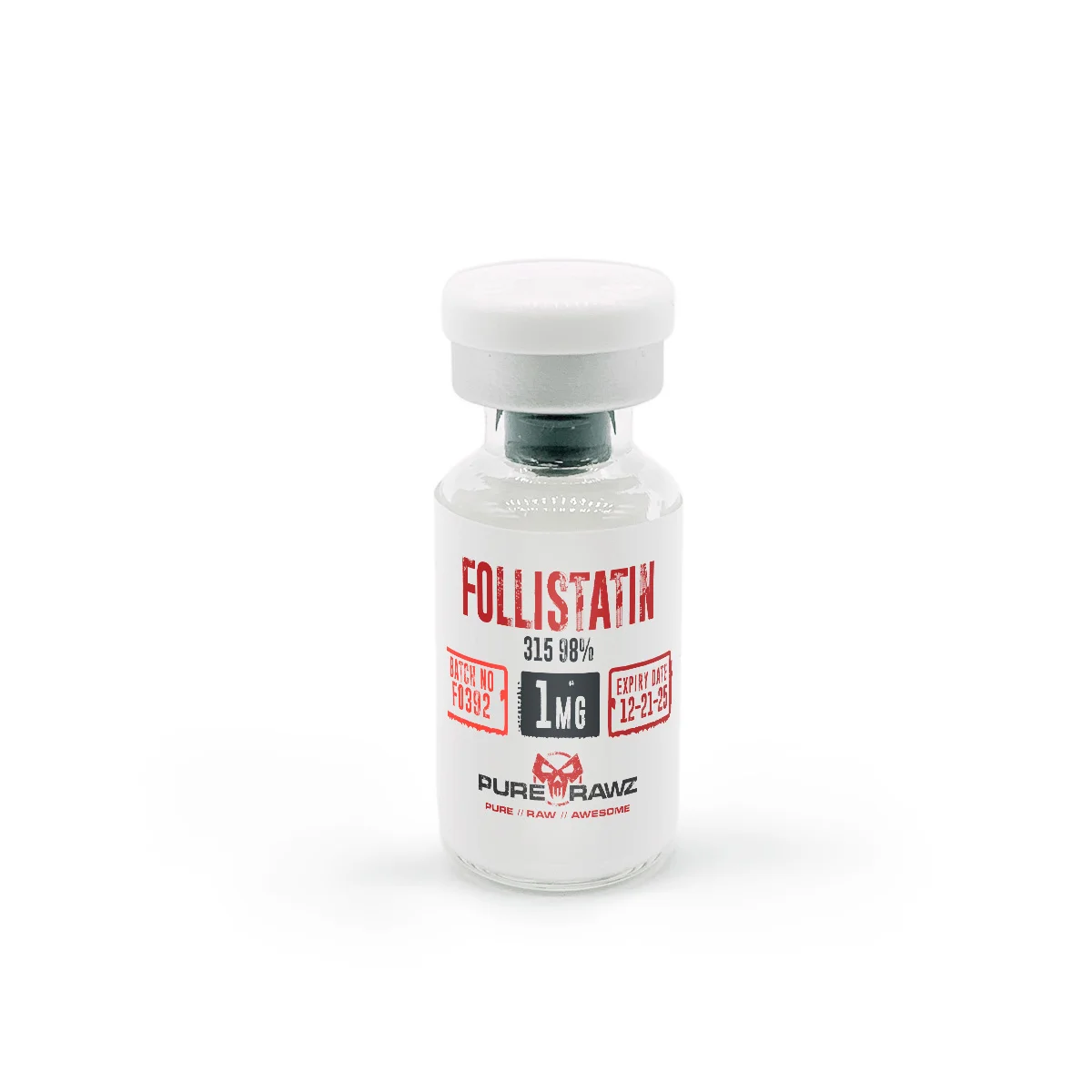
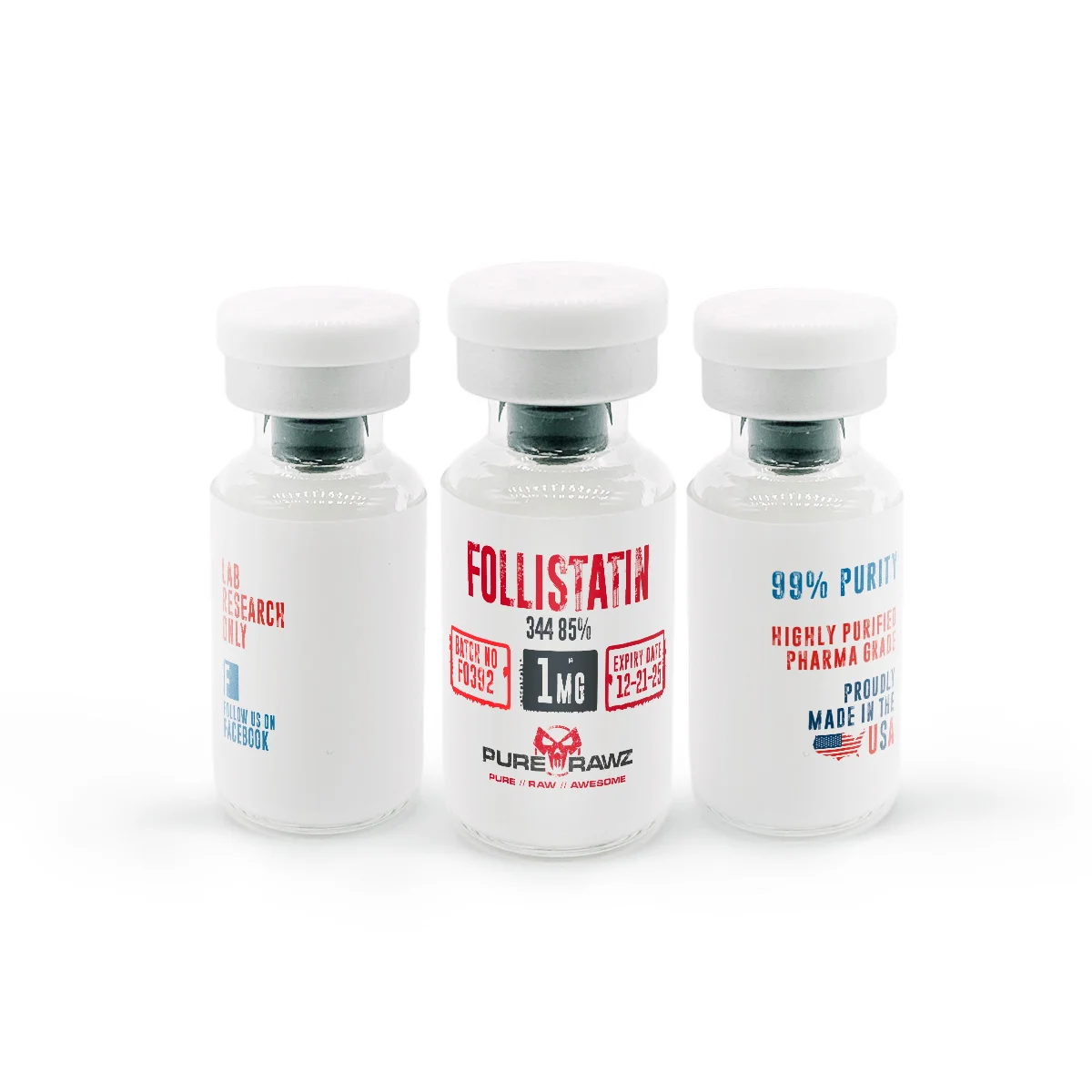
Follistatin
Price range: AUD132 through AUD186
 19 sold in last 6 hours
Buy Follistatin online | Follistatin for sale
Follistatin is encoded by the FST gene. It is associated with regulatory systems within the transforming growth factor-beta (TGF-β) superfamily. It contains cysteine-rich domains that facilitate high-affinity binding to specific ligands. This is particularly important for binding to ligands such as activin and myostatin.
In research settings, these interactions are examined at the molecular level. This helps researchers understand how ligand sequestration influences receptor accessibility and downstream signaling pathways.
Note: Follistatin is not approved for human or veterinary use and is intended strictly for laboratory research purposes.
Chemical and Molecular Properties
| Follistatin | |
| Molecular Formula | Not a single fixed formula (protein composed of ~344 amino acids) |
| Molar Mass | ~37–40 kDa (≈ 37,000–40,000 g/mol depending on isoform) |
| Synonyms | Activin-binding protein; FST (gene product) |
| IUPAC | Not commonly assigned due to peptide complexity; defined by full amino acid sequence |
| Labeling | Research Use Only (RUO). Not for human or veterinary use. |
| Chemical Structure Depiction | 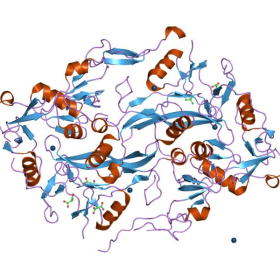 |
| Purity | ≥98% |
| Classification | Research Use Only (RUO) |
| Safety | Handle with gloves, a lab coat, and eye protection; use a fume hood if dust/aerosol is possible |
Working Mechanism of Follistatin
Follistatin’s activity is primarily defined through ligand-binding interactions. These interactions influence downstream signaling pathways. The following mechanisms describe its molecular behavior:
- Follistatin forms high-affinity complexes with activin and myostatin, preventing their interaction with activin receptors (ActRIIA/IIB).
- This ligand sequestration alters downstream signaling cascades. Follistatin indirectly inhibits SMAD signaling by blocking ligand binding upstream.
- The binding interaction is mediated through follistatin’s cysteine-rich domains. These interactions stabilize ligands–protein complexes.
- Follistatin indirectly influences transcriptional signaling pathways. This occurs through modulation of ligand–receptor interactions. These pathways are regulated by SMAD complexes.
- The protein’s activity is also associated with extracellular regulation, affecting the distribution and bioavailability of signaling molecules in the cellular microenvironment.
Why Choose Purerawz for Follistatin?
Buy Follistatin for laboratory research use from our online shop. At Purerawz, we provide high-quality reference materials. Each research compound comes with a Certificate of Analysis for verification of purity and concentration.
Note:
Recombinant follistatin and related therapies are under investigation.It has not been evaluated or approved for therapeutic use.
Disclaimer
This information is for educational purposes only and not medical advice. Products are for research use only. Research must follow IRB or IACUC guidelines. Verify information independently before purchasing. By ordering, you agree to our Terms and Conditions.
ATTENTION: All our products are for LABORATORY AND RESEARCH PURPOSES ONLY, not for veterinary or human use
Frequently Asked Questions
What is Follistatin?
Follistatin is a naturally occurring glycoprotein that binds and neutralises members of the TGF-beta superfamily, including myostatin and activin. It is investigated in laboratory research as a modulator of these signalling pathways.
Is Follistatin legal or approved in Australia?
Follistatin is not an approved therapeutic good and does not appear on the Australian Register of Therapeutic Goods. It is offered strictly for laboratory research use only, not for human or veterinary use, and researchers must ensure compliance with all relevant Australian legislation and TGA requirements.
How is Follistatin tested and quality assured?
Follistatin is subjected to third-party analysis using HPLC and mass spectrometry to verify identity and composition. A batch-specific Certificate of Analysis (COA) accompanies each lot, documenting purity of 99% or greater.
How does Follistatin differ from Myostatin in research contexts?
Myostatin is a growth-differentiation factor that limits muscle-related signalling, whereas Follistatin is studied as an antagonist that binds and inhibits myostatin activity. The two are frequently examined together in research on TGF-beta pathway regulation.
For laboratory and research use only. This product is not for human or veterinary consumption, and nothing on this page is medical advice. Researchers are responsible for compliance with all applicable Australian laws (including TGA regulations) and institutional guidelines.
| Form | 315 98% Peptide, 344 85% Peptide, 344 95% Peptide |
|---|---|
| Strength | 1mg |
Reviews
There are no reviews yet.