
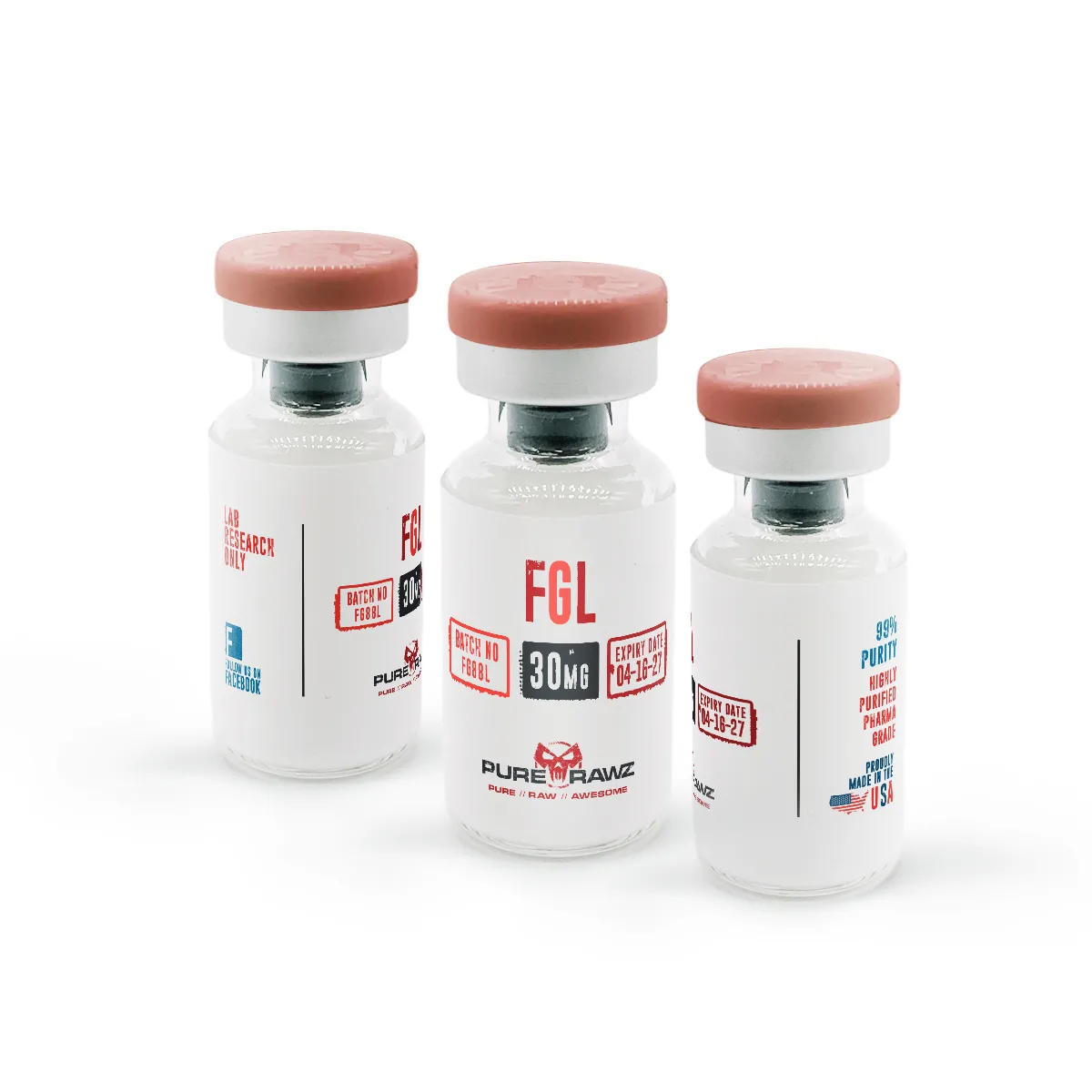
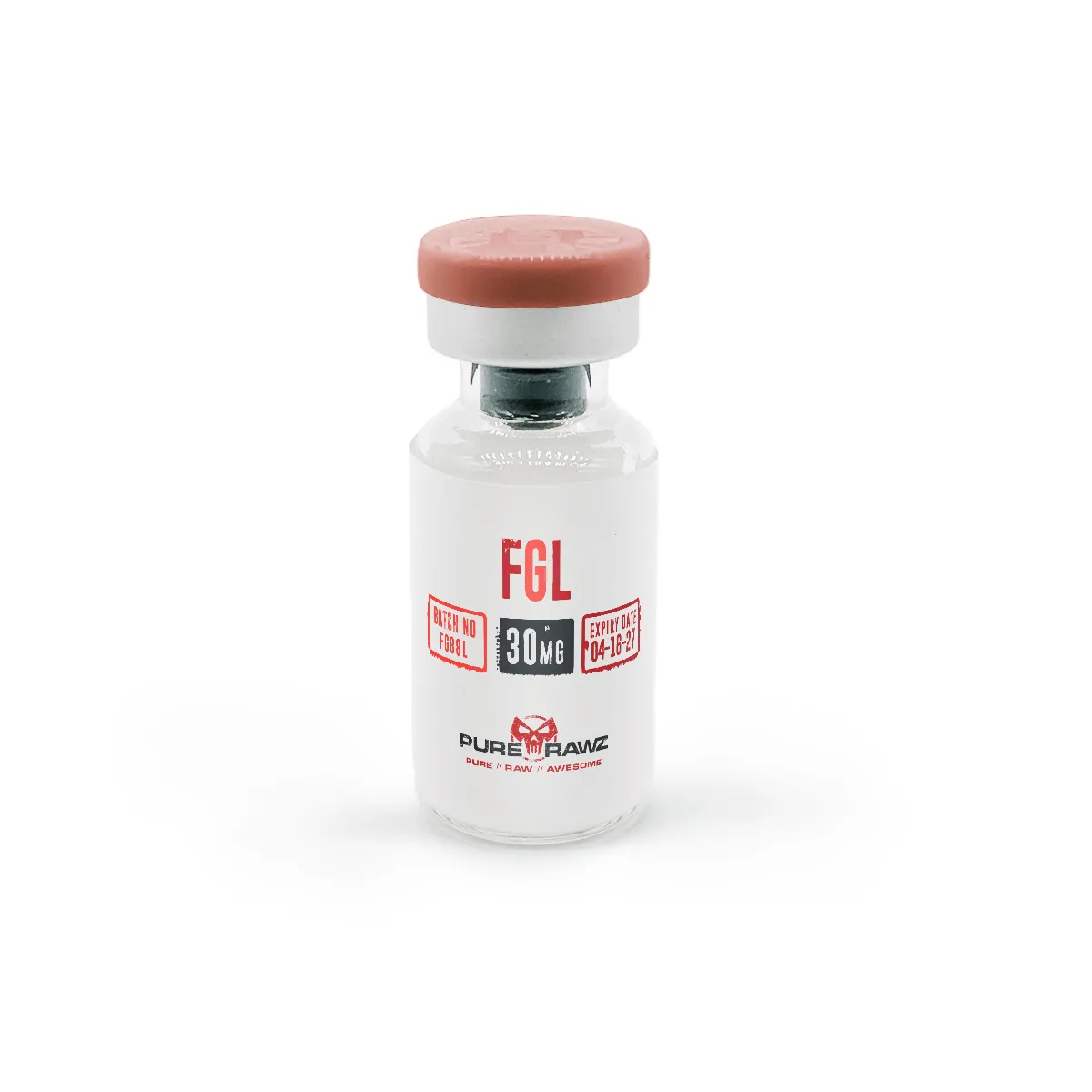
FGL
AUD265
 9 sold in last 2 hours
Buy FGL online | FGL for sale
FGL peptide is a synthetic 15–amino acid peptide fragment derived from a functional region associated with Fibroblast Growth Factor-2 (FGF-2) signaling. The peptide corresponds to a sequence that mimics the FG loop region of the Neural Cell Adhesion Molecule (NCAM), a protein involved in cellular communication within neural tissues.
Because of this structural relationship, FGL is frequently studied in investigational neuroscience research to explore mechanisms related to receptor-mediated signaling and neuronal communication.
In in vitro studies and experimental research models, FGL is used to investigate how NCAM-associated peptide fragments interact with fibroblast growth factor receptors (FGFRs) and influence intracellular signaling pathways. These molecular interactions are of interest in laboratory environments examining synaptic signaling networks, receptor activation mechanisms, and intracellular signal transduction processes.
Chemical and Molecular Properties
| Compound Name | FGL Peptide |
| Synonyms | FGL peptide; HY-P3281; DA-53184 |
| CAS Number | 499993-62-3 |
| PubChem CID | 16200289 |
| Molecular Formula | C₇₁H₁₁₆N₂₀O₂₅ |
| Molecular Weight | 1649.8 g/mol |
| Chemical Classification | Synthetic peptide |
| Amino Acid Length | 15 amino acids |
| IUPAC Name | L-alpha-glutamyl-L-valyl-L-tyrosyl-L-valyl-L-valyl-L-alanyl-L-alpha-glutamyl-L-asparagyl-L-glutaminyl-L-glutaminyl-glycyl-L-lysyl-L-seryl-L-lysyl-L-alanine |
| Physical Form | Typically supplied as a lyophilized peptide powder for research applications |
| Chemical Structure Description |
Working Mechanism
FGL peptide is investigated in experimental neuroscience models for its ability to mimic a functional interaction region associated with NCAM-FGFR signaling. The mechanism examined in laboratory studies primarily involves receptor activation and intracellular signal transduction pathways.
- FGL contains a sequence designed to replicate a region of NCAM responsible for interaction with fibroblast growth factor receptor-1 (FGFR1).
- When studied in experimental cell systems, FGL can bind to FGFR1, a receptor tyrosine kinase associated with multiple intracellular signaling cascades.
- Through receptor-mediated signaling activation, FGL is investigated as a research tool for studying intracellular pathways involved in neuronal signaling processes, synaptic communication mechanisms, and receptor-driven transcriptional responses within controlled experimental systems.
Experimental studies have shown that FGFR1 activation can trigger several intracellular pathways frequently examined in cell signaling research, including:
- MAPK/ERK signaling pathway, involved in cellular signal transduction and transcriptional regulation
- PI3K–Akt signaling pathway, associated with intracellular regulatory signaling networks
- PLCγ pathway, which contributes to intracellular calcium signaling dynamics
Research Applications of FGL Peptide in Laboratory Settings
NCAM–FGFR Signaling Studies
FGL is utilized in in vitro receptor interaction studies to investigate how NCAM-derived peptide sequences influence FGFR activation and downstream signaling pathways.
Synaptic Signaling and Cellular Communication Research
Researchers employ FGL in experimental neural cell models to study intracellular signaling pathways that regulate neuronal communication and synaptic signaling dynamics.
Intracellular Signal Transduction Analysis
FGL can be used in molecular pathway experiments designed to analyze activation of signaling cascades such as MAPK/ERK, PI3K–Akt, and PLCγ in controlled experimental systems.
Neurobiology and Cellular Signaling Investigations
In preclinical research environments, FGL may serve as a peptide-based research tool for examining molecular pathways involved in neuronal signaling networks and receptor-mediated communication.
Experimental Models of Neural Signaling Pathways
FGL is also used in laboratory-based neurobiological studies that investigate how peptide fragments influence intracellular regulatory pathways related to neural cell signaling processes.
Why Choose Purerawz for FGL Peptide?
Buy FGL Peptide for laboratory research use from our online shop. At Purerawz, we provide high-quality reference materials. Each research compound comes with a Certificate of Analysis for verification of purity and concentration.
Disclaimer
This information is for educational purposes only and not medical advice. Products are for research use only. Research must follow IRB or IACUC guidelines. Verify information independently before purchasing. By ordering, you agree to our Terms and Conditions.
Frequently Asked Questions
What is FGL?
FGL is a synthetic peptide derived from the neural cell adhesion molecule (NCAM) and studied as a reference compound in neuroscience laboratory research. PureRawz Australia provides it for in vitro and non-clinical investigation only.
Is FGL legal or approved in Australia?
FGL is not an approved therapeutic good and does not appear on the Australian Register of Therapeutic Goods. It is supplied for laboratory research use only, and the researcher is responsible for compliance with TGA rules and applicable Australian law.
How is FGL tested?
Every batch is analysed by independent third-party laboratories using HPLC and mass spectrometry to confirm structure and purity. A certificate of analysis (COA) documenting purity of at least 99% is provided for reference.
How should FGL be stored for research use?
Lyophilised FGL is typically kept frozen and protected from light and moisture to maintain stability over time. Reconstituted solutions are generally stored refrigerated and used within a short window according to laboratory handling practices.
For laboratory and research use only. This product is not for human or veterinary consumption, and nothing on this page is medical advice. Researchers are responsible for compliance with all applicable Australian laws (including TGA regulations) and institutional guidelines.
| Form | Peptide |
|---|---|
| Strength | 30mg |
Reviews
There are no reviews yet.