
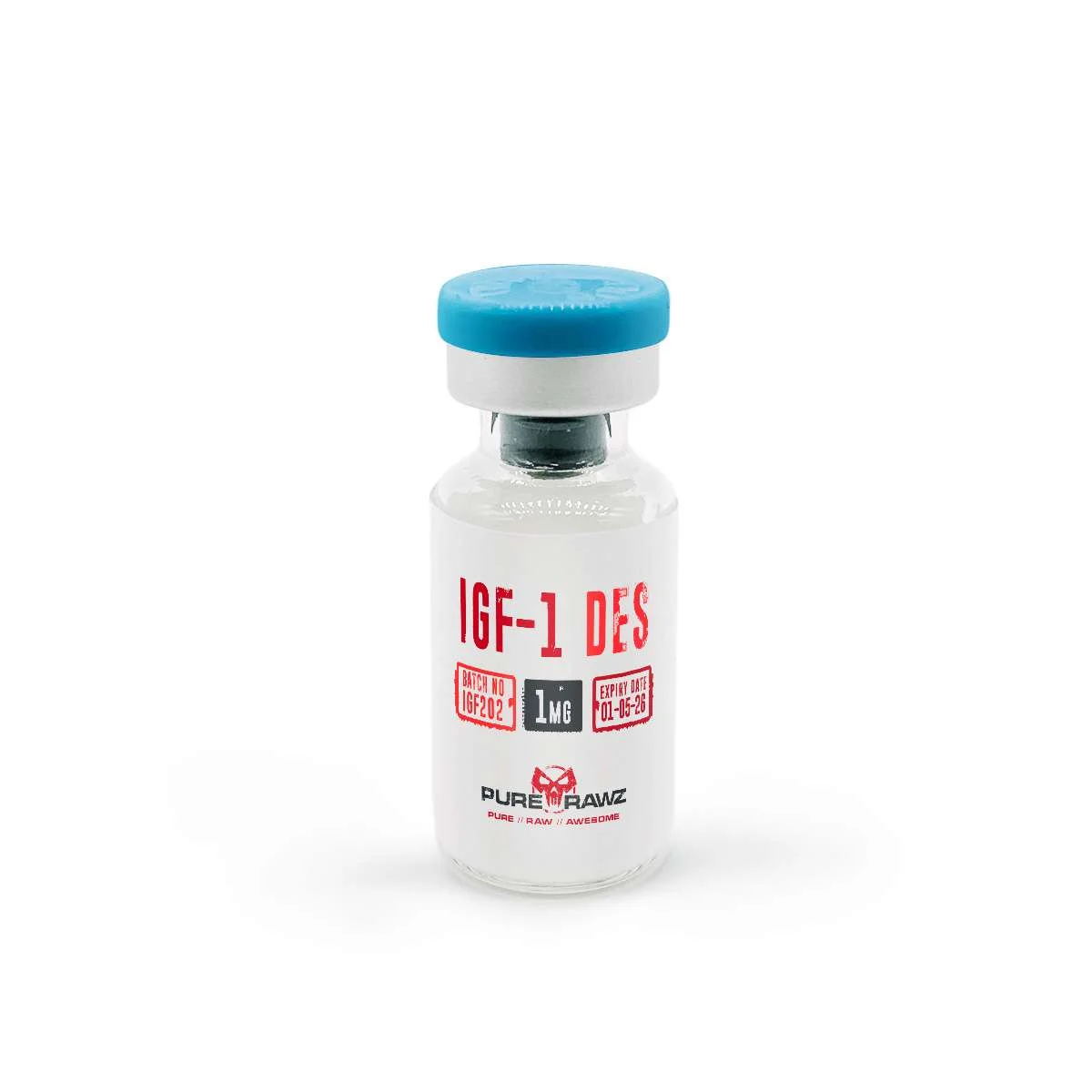
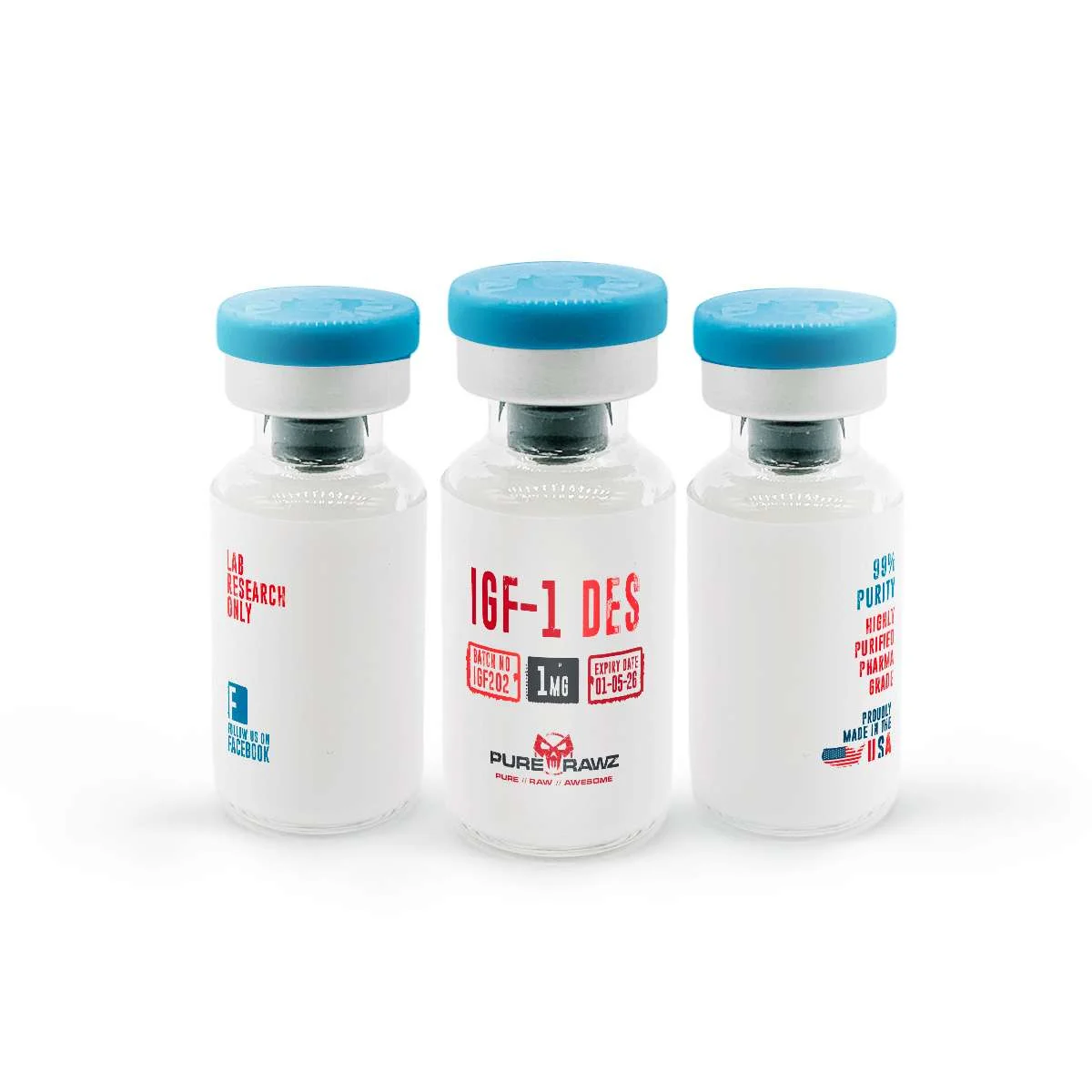
IGF-1 DES
Price range: AUD110 through AUD138
 12 sold in last 4 hours
IGF-1 DES, more fully IGF-1 DES(1-3), is a truncated analog of insulin-like growth factor 1 in which the first three N-terminal amino acids have been removed. This deletion variant is a well-characterised member of the IGF family used as a reference standard, and is supplied strictly as laboratory research material for research use only.
Research Background
IGF-1 DES(1-3) has been studied in the context of IGF-1 receptor signalling, where the removal of the N-terminal tripeptide is associated with altered binding behaviour toward IGF-binding proteins. This modified interaction profile is why the DES variant is used in comparative in vitro research alongside native IGF-1 and other analogs, as a way of probing how binding-protein engagement modulates growth-factor signalling.
Within cell-based assays, IGF-1 DES is frequently employed as a reference analog for studying the IGF-1/IGF-1R axis and downstream pathways such as those involved in cellular proliferation and differentiation. Its distinct binding characteristics make it a useful comparator for researchers dissecting the roles of binding proteins versus receptor interaction in laboratory systems.
IGF-1 DES Specifications & Handling
- Purity: ≥99% by analytical determination.
- Analytical verification: third-party reversed-phase HPLC and mass spectrometry, with a batch certificate of analysis (COA) available.
- Classification: N-terminally truncated IGF-1 analog, DES(1-3) variant.
- Physical form: lyophilised powder.
- Storage: store cool and dark; keep the lyophilised material sealed against moisture and light for long-term stability.
- Reconstitution: reconstitute with bacteriostatic water or a suitable research-grade solvent where applicable, at concentrations appropriate to the assay.
- Use restriction: laboratory research use only; not for human or veterinary use.
Related Research Compounds
Researchers comparing IGF-family analogs commonly reference IGF-1 LR3, PEG-MGF and MGF (Mechano Growth Factor) alongside this variant. Additional standards are listed in the research peptides category.
Frequently Asked Questions
What is the difference between IGF-1 DES and native IGF-1?
IGF-1 DES(1-3) lacks the first three N-terminal amino acids of native IGF-1. This truncation is associated with altered binding to IGF-binding proteins in research settings.
Why is IGF-1 DES used as a research comparator?
Its modified binding-protein interaction makes it useful for studying how binding proteins versus direct receptor engagement influence IGF-1/IGF-1R signalling in vitro.
How is IGF-1 DES analytically confirmed?
Each batch is assessed by reversed-phase HPLC and mass spectrometry, with a batch-specific certificate of analysis available.
In what form is IGF-1 DES supplied?
It is provided as a lyophilised powder to be stored cool and dark and reconstituted only when required for an assay.
For laboratory and research use only. This product is not for human or veterinary consumption, and nothing on this page is medical advice. Researchers are responsible for compliance with all applicable Australian laws (including TGA regulations) and institutional guidelines.
| Form | Peptide, Nasal Spray |
|---|---|
| Strength | 1mg, 10mcg per spray/1mg |
Reviews
There are no reviews yet.