
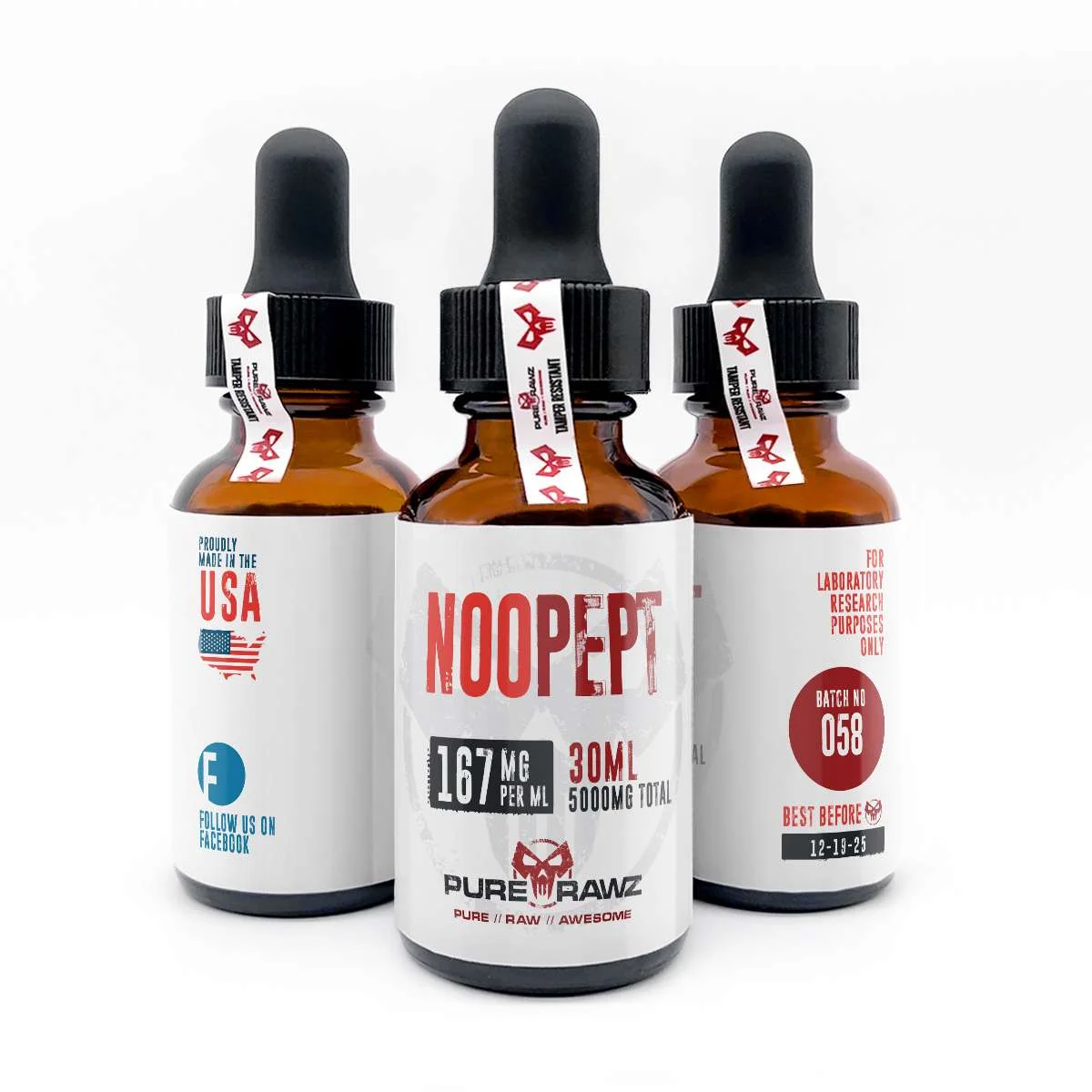
Noopept
Price range: AUD10 through AUD52
 3 sold in last 14 hours
Buy Noopept online | Noopept for sale
Noopept, chemically known as N-phenylacetyl-L-prolylglycine ethyl ester, is a synthetic dipeptide-derived compound investigated in neurochemical and molecular neuroscience research. Structurally, it is related to compounds within the racetam-associated class of cognitive research molecules, though it differs chemically due to its dipeptide backbone and phenylacetyl functional group.
In laboratory environments, Noopept is utilized as an investigational research compound for examining molecular processes associated with neuronal signaling, synaptic communication, and neurotrophic factor regulation. Research interest in this compound centers on its interactions with neurotransmitter systems and intracellular signaling pathways involved in synaptic plasticity and neuronal regulatory mechanisms.
Chemical and Molecular Properties
| Property | Value |
| Compound Name | Noopept |
| Chemical Name | N-phenylacetyl-L-prolylglycine ethyl ester |
| Molecular Formula | C17H22N2O4 |
| Molecular Weight | 318.37 g/mol |
| CAS Number | 157115-85-0 |
| PubChem CID | 180496 |
| IUPAC Name | Ethyl 2-[[(2S)-1-(2-phenylacetyl)pyrrolidine-2-carbonyl]amino]acetate |
| Synonyms | GVS-111, Omberacetam |
Working Mechanism
Modulation of Glutamatergic Signaling
Experimental studies indicate that Noopept may influence signaling associated with ionotropic glutamate receptors, including:
- AMPA receptors
- NMDA receptors
These receptor systems are widely investigated in neuroscience research because they participate in synaptic transmission and intracellular calcium signaling. Modulation of these receptor pathways is often examined to understand molecular mechanisms related to neuronal communication and signal transduction.
Regulation of Neurotrophic Signaling Pathways
Laboratory studies have also explored the relationship between Noopept and neurotrophic factor expression, including pathways involving:
- Brain-Derived Neurotrophic Factor (BDNF)
- Nerve Growth Factor (NGF)
Neurotrophic factors are proteins involved in neuronal differentiation, synaptic maintenance, and intracellular signaling regulation. In experimental models, researchers analyze how molecular compounds influence the transcription and translation of these regulatory proteins.
Intracellular Signaling and Synaptic Plasticity
In cellular research systems, Noopept is investigated for its interaction with intracellular signaling cascades that regulate synaptic structure and neuronal signaling efficiency. These pathways often involve kinase activation, gene expression regulation, and synaptic protein modulation.
Such mechanisms are evaluated using molecular assays, neuronal cell cultures, and controlled experimental models designed to analyze synaptic signaling dynamics.
Research Applications of the Product in Laboratory Settings
Neurotransmitter Signaling Research
In in vitro neuronal models, researchers use Noopept to analyze the molecular behavior of glutamatergic and cholinergic signaling systems. These studies investigate receptor activity, signal transduction pathways, and regulatory mechanisms involved in synaptic communication.
Neurotrophic Factor Expression Studies
Noopept is frequently incorporated into experimental models investigating neurotrophic factor pathways, particularly those involving BDNF and NGF. Laboratory studies evaluate changes in transcriptional activity, protein expression levels, and intracellular signaling responses associated with these regulatory molecules.
Synaptic Plasticity and Cellular Signaling Analysis
Researchers employ Noopept in cell culture experiments and molecular assays designed to examine synaptic protein expression, dendritic signaling pathways, and intracellular communication networks that influence synaptic architecture in neuronal systems.
Preclinical Neurochemical Research Models
In preclinical experimental models, Noopept may be used to investigate interactions between small molecules and neuronal signaling pathways. These studies help researchers analyze molecular signaling networks, receptor modulation processes, and biochemical responses within controlled experimental systems.
Why Choose Purerawz for Noopept?
Buy Noopept for laboratory research use from our online shop. At Purerawz, we provide high-quality reference materials. Each research compound comes with a Certificate of Analysis for verification of purity and concentration.
Disclaimer
This information is for educational purposes only and not medical advice. Products are for research use only. Research must follow IRB or IACUC guidelines. Verify information independently before purchasing. By ordering, you agree to our Terms and Conditions.
Frequently Asked Questions
What is Noopept?
Noopept (GVS-111) is a synthetic dipeptide-based compound structurally related to the racetam research family, though it is a proline-containing dipeptide derivative. It is supplied strictly as a research chemical for laboratory investigation and is not for human or veterinary use.
Can Noopept be imported or is it legal in Australia?
Noopept is offered for laboratory research use only, and synthetic nootropic compounds in this class may be subject to import or supply restrictions in Australia. Researchers must confirm the current regulatory and import status with the relevant authorities before ordering or importing.
How is Noopept tested?
Each batch is analysed by independent third-party laboratories using high-performance liquid chromatography (HPLC) and mass spectrometry. A certificate of analysis (COA) accompanies each batch, confirming identity and a purity specification of not less than 99%.
How should Noopept be stored in a laboratory setting?
For research stability it is generally stored in a cool, dry environment, protected from light and moisture, with containers kept sealed. Storage conditions should follow the parameters noted on the accompanying certificate of analysis.
For laboratory and research use only. This product is not for human or veterinary consumption, and nothing on this page is medical advice. Researchers are responsible for compliance with all applicable Australian laws (including TGA regulations) and institutional guidelines.
| Form | Liquid, Powder, Nasal Spray, Tablet |
|---|---|
| Strength | 30ml/167mg per ml/5000mg, 15ml/84mg per ml/1260mg, 40mg/27ct/1080mg, 40mg/54ct/2160mg, 5g, 1mg/spray=100mg total |
Reviews
There are no reviews yet.