
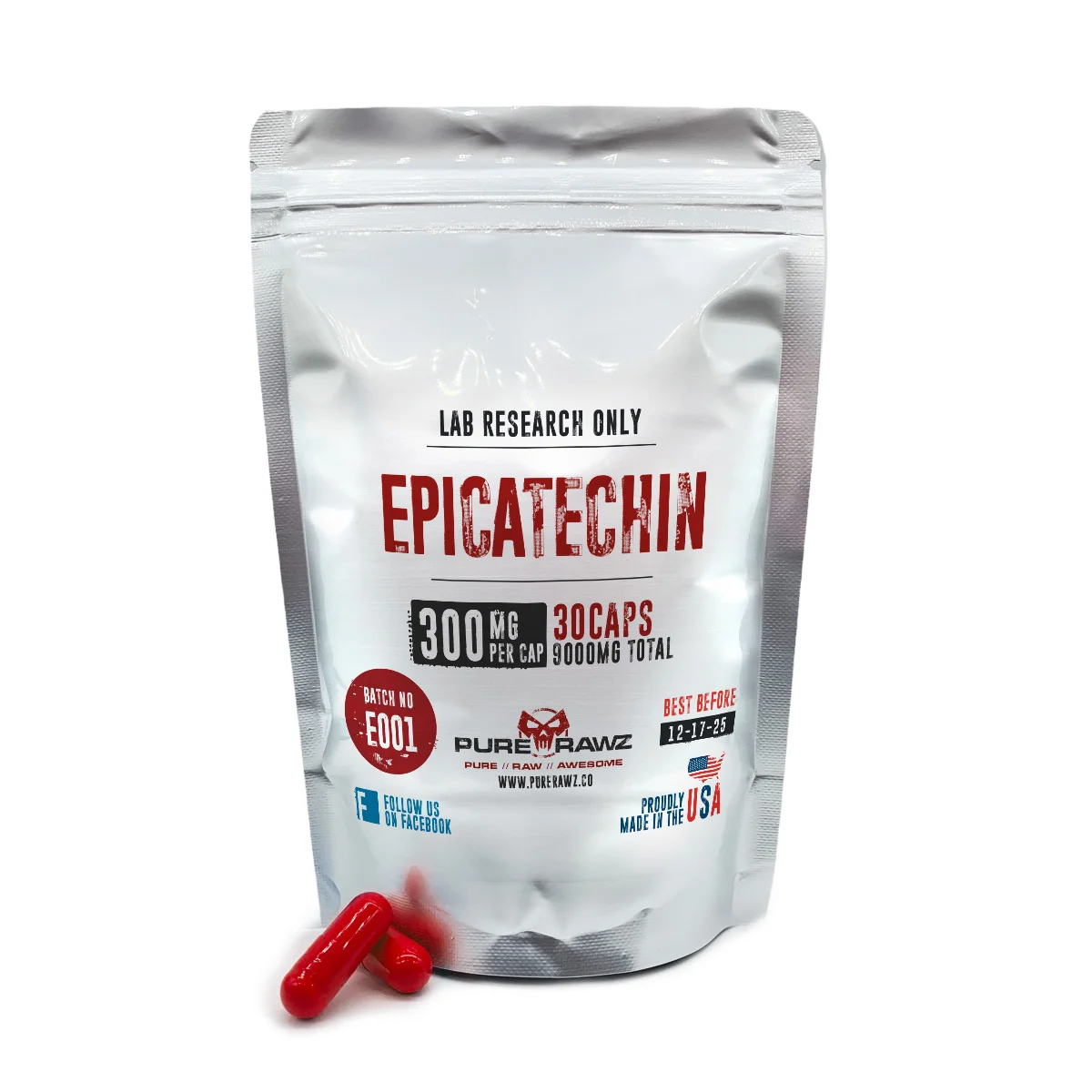
Epicatechin
Price range: AUD39 through AUD45
 19 sold in last 3 hours
Buy Epicatechin online | Epicatechin for sale
Epicatechin, often written as (-)-epicatechin, is a flavanol compound with several hydroxyl groups attached to a flavan-3-ol backbone. These structural features are associated with the compound’s redox activity and its role in various biochemical interactions observed in laboratory models. The molecule belongs to the broader flavonoid family of polyphenols. It occurs naturally in many plants, including cocoa beans, tea leaves, and certain fruits.
| Property | Data |
| Compound Name | (-)-Epicatechin |
| PubChem CID | 72276 |
| CAS Number | 490-46-0 |
| Molecular Formula | C15H14O6 |
| Molecular Weight | 290.27 g/mol |
| Chemical Classification | Flavanol (Flavonoid polyphenol) |
| IUPAC Name | (2R,3R)-2-(3,4-dihydroxyphenyl)-3,4-dihydro-2H-chromene-3,5,7-triol |
| Structure |  |
| Source Database | PubChem (NCBI) |
Working Mechanism
In laboratory studies, epicatechin is often examined in connection with cellular redox balance and metabolic signaling. The molecule contains phenolic groups that can participate in oxidation–reduction reactions.
It may influence oxidative stress pathways in experimental systems. Researchers sometimes explore these reactions when studying how polyphenols interact with cellular signaling networks.
Research Applications
The molecular structure of epicatechin is frequently analyzed in studies focused on polyphenol signaling and oxidative stress pathways. These investigations help scientists observe how flavonoid compounds interact with complex biochemical systems.
In vascular biology models, epicatechin has also been included in laboratory assays examining nitric oxide signaling. Such experiments explore how plant-derived flavonoids may affect enzyme systems involved in nitric oxide production.
Another area of interest involves mitochondrial signaling and energy metabolism. In controlled laboratory settings, epicatechin has been used to investigate how flavanol compounds interact with pathways involved in cellular energy metabolism.
Why Buy at PureRawz
PureRawz supplies research materials intended for analytical and laboratory use.
Orders placed through PureRawz include product documentation, secure packaging, and traceable sourcing practices. For laboratories purchasing investigational materials, orders over $100 qualify for free shipping.
Customers may also subscribe to the PureRawz newsletter to receive updates about new product releases and promotions.
Note: PureRawz only distributes epicatechin as a research chemical. The chemical has not been approved in the United States. The Food and Drug Administration (FDA) approves the product for medicinal or veterinary purposes.
Research Disclaimer
The information provided is intended for scientific reference and educational purposes only.
By placing an order, you agree to the PureRawz Terms and Conditions.
ATTENTION: All products are FOR LABORATORY AND RESEARCH PURPOSES ONLY and NOT FOR HUMAN OR ANIMAL USE.
All experimental procedures should be conducted by qualified professionals and must comply with institutional regulatory oversight, such as IRB or IACUC guidelines, where applicable.
Frequently Asked Questions
What is Epicatechin?
Epicatechin is a naturally occurring flavanol polyphenol found in sources such as cocoa and tea, studied within antioxidant and adaptogen-adjacent research contexts. It is supplied as a laboratory research reference material and is not intended for human or veterinary use.
Can Epicatechin be imported or is it legal in Australia?
This material is offered strictly for laboratory research use and is not for human consumption. Import and supply requirements can vary for research chemicals, so researchers should confirm the current regulatory and import status in their jurisdiction before ordering.
How is Epicatechin tested?
Each batch is analysed by independent third-party laboratories using HPLC and mass spectrometry to confirm identity and purity. A certificate of analysis (COA) verifying at least 99% purity accompanies the batch.
How should Epicatechin be stored in the laboratory?
Polyphenols such as epicatechin are generally kept as a dry powder in a sealed, light-protected container away from moisture to limit oxidation. Storage should follow the conditions noted on the accompanying certificate of analysis.
For laboratory and research use only. This product is not for human or veterinary consumption, and nothing on this page is medical advice. Researchers are responsible for compliance with all applicable Australian laws (including TGA regulations) and institutional guidelines.
| Form | Capsules |
|---|---|
| Strength | 300mg per capsule/30ct/9000g, 300mg per capsule/60ct/18000g |
Reviews
There are no reviews yet.