
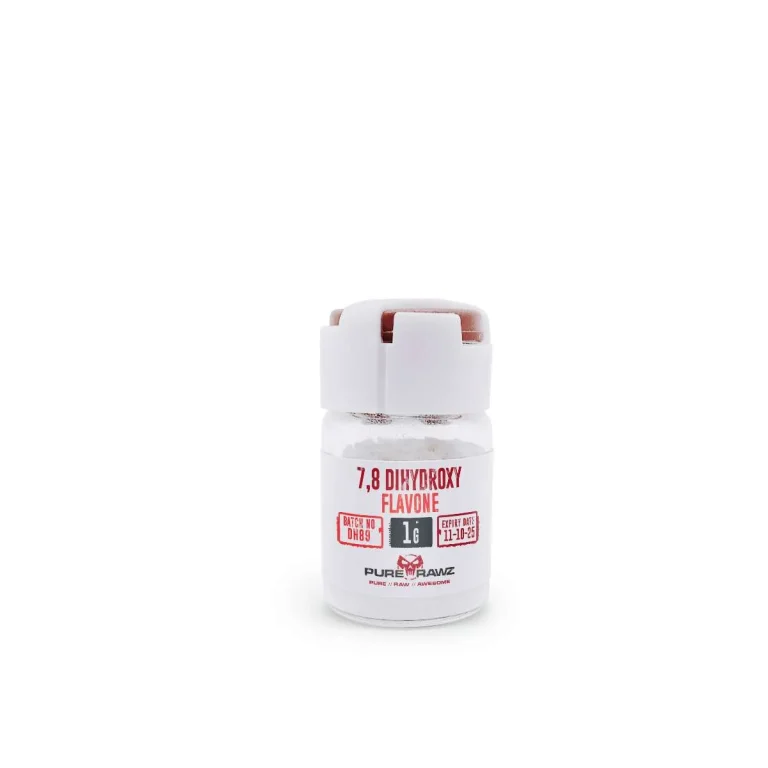
7, 8 Dihydroxyflavone
Original price was: AUD27.AUD23Current price is: AUD23.
 17 sold in last 14 hours
7,8-Dihydroxyflavone is a naturally occurring flavone-class research compound studied as a small-molecule ligand at the tropomyosin receptor kinase B (TrkB) receptor. It is supplied strictly for laboratory research use only and is not intended for human or veterinary use. The compound is used by laboratory researchers as a reference material in neurotrophin-signalling and receptor-pharmacology investigations.
Research Background
7,8-Dihydroxyflavone has been investigated in research on activation of TrkB, the principal receptor for brain-derived neurotrophic factor (BDNF). Preclinical and in vitro studies have examined its capacity to engage TrkB-associated downstream cascades, including the ERK and Akt signalling pathways, in cell-culture and rodent-model systems.
Interest in this flavone within the exploratory literature centres on its role as a tool compound for probing BDNF-TrkB signalling independently of the native neurotrophin. It is offered here solely as a characterised laboratory standard to support such mechanistic research, without any applied, therapeutic or performance inference.
7,8-Dihydroxyflavone Specifications & Handling
- Purity: ≥99% as determined by analytical assay.
- Third-party verification: independent HPLC and mass spectrometry, with a batch-specific Certificate of Analysis (COA) available.
- Physical form: powder.
- Storage: store in a cool, dry, dark environment; keep sealed and protected from light and oxidation.
- Intended use: in vitro and preclinical laboratory research reference applications only.
Related Research Compounds
Researchers exploring neurotrophin and neuroplasticity signalling often review adjacent standards such as NSI-189 Phosphate, Uridine Monophosphate Disodium and Methylene Blue. Further characterised standards are catalogued under research nootropics.
Frequently Asked Questions
What is 7,8-Dihydroxyflavone?
It is a naturally occurring flavone studied as a small-molecule ligand at the TrkB receptor, which mediates BDNF signalling. It is supplied only as a reference material for laboratory research.
Is 7,8-Dihydroxyflavone legal to import for research in Australia?
It is provided for laboratory research use only and not for human or veterinary use. Australian researchers must confirm the current regulatory and import status of this compound in their jurisdiction before ordering.
What testing is performed on this flavone?
Each batch is characterised by independent HPLC and mass spectrometry, with a batch-specific Certificate of Analysis available on request.
How should 7,8-Dihydroxyflavone be stored?
Keep the powder sealed in a cool, dry and dark environment, protected from light and oxidation, to preserve its stability during use.
For laboratory and research use only. This product is not for human or veterinary consumption, and nothing on this page is medical advice. Researchers are responsible for compliance with all applicable Australian laws (including TGA regulations) and institutional guidelines.
| Form | Powder |
|---|---|
| Strength | 1g |
Reviews
There are no reviews yet.