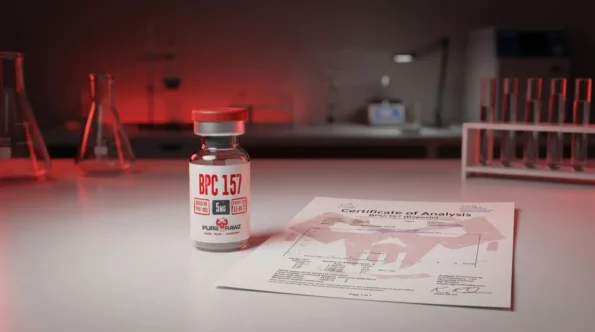
How-Research-Peptide-Quality-Impacts-Experimental-Outcomes

How Research Peptide Quality Impacts Experimental Outcomes?

Research peptides are short amino-acid chains used as research reagents in laboratory settings. Research peptide quality holds paramount importance in the analytical research sector. It may change the conclusions and reproducibility in preclinical models. Although multiple factors intervene in the peptide-related research outcomes. The most common among them is the impurity of research peptides. Studies have […]

CONTINUE READING ➞
What-Are-Research-Peptides

What Are Research Peptides? A Scientific Overview

In laboratory settings, researchers conduct unique experiments to learn more about processes that can serve as a foundation for the medical industry. Peptides are one of those research compounds. They are small chains of amino acids that act as building blocks of proteins in humans.  However, research peptides are synthesized in labs and are not approved for human […]

CONTINUE READING ➞
How-Peptides-Function-at-the-Molecular-Level

How Peptides Function at the Molecular Level?

At the molecular level, peptides function through their structure, chemical bonding, and interaction with other biological molecules. Peptides are short chains of amino acids that are linked together through peptide bonds, which form a defined sequence.  The peptide sequence helps determine how the molecule behaves in the cellular environment. In the following blog, we’ll give you a […]

CONTINUE READING ➞
How-is-Research-Peptide-Purity-Determined (1)

How is Research Peptide Purity Determined?

The most common method for determining research peptide purity is reversed-phase high-performance liquid chromatography (RP-HPLC). It is coupled with mass spectrometry and a few additional analytical techniques.  The research peptide purity is determined by analytical laboratory techniques. These techniques are used to separate, identify, and measure peptide molecules from unwanted byproducts. Peptide purity helps with […]

CONTINUE READING ➞
26.04.14_PRZ_How-to-Read-a-Peptide-COA-Real-vs-Fake-1400x781

How to Read a Peptide COA (Real vs Fake)

In research settings, even small variations in material quality can influence results in noticeable ways. Because of this, researchers depend on proper documentation. It helps them better understand what they are working with. One of the key documents with research peptides is the Certificate of Analysis (COA). Many COAs follow a similar format and include technical data. […]

CONTINUE READING ➞
26.04.14_PRZ_Why-Peptide-Structure-Influences-Stability-_blog_image-1400x781

Why Peptide Structure Influences Stability

Peptides are not very stable. Peptide stability varies under laboratory conditions, depending on sequence and environment. This behavior is well-documented in peptide chemistry. This is closely tied to peptide structure. Understanding Peptide Structure in Relation to Stability Peptide structure is defined by its primary sequence, which is the linear order of amino acids linked by […]

CONTINUE READING ➞
26.04.14_PRZ_Red-Flags-When-Purchasing-Research-Peptides-_blog_image-1400x781

Red Flags When Purchasing Research Peptides

A product listing can look complete and trustworthy at first glance. Researchers may find clean specifications, reasonable pricing, and professional presentation. However, closer inspection often reveals problems with quality and documentation. By then, they may already be affecting an ongoing study. Differences in quality and documentation among research peptide suppliers are not always immediately apparent. Some suppliers […]

CONTINUE READING ➞
Close My Cart
Close Wishlist
Recently Viewed Close
Close

Close
Navigation
Categories