Nootropics Research Guide: Noopept, Racetams, Semax & Selank Compared

The nootropics research category covers a structurally diverse set of compounds sharing a common area of investigation: modulation of cognitive function, neuroprotection, and neurochemical signalling. For Australian researchers sourcing nootropic compounds, understanding the distinct mechanisms of the four most-studied classes — the classical racetam family, Noopept, and the synthetic peptide nootropics Semax and Selank — […]

CONTINUE READING ➞

GHK-Cu (Copper Peptide) Research Guide: Collagen Synthesis, Gene Modulation & Wound Healing Studies

GHK-Cu (Glycyl-L-Histidyl-L-Lysine:Copper(II)) is a naturally occurring copper-binding tripeptide found in human plasma, saliva, and urine. Unlike many research peptides that are entirely synthetic constructs, GHK-Cu is endogenously present in the human body — with plasma concentrations declining significantly with age, prompting research interest in its role in tissue maintenance, wound healing, and skin biology. This […]

CONTINUE READING ➞

TB-500 (Thymosin Beta-4) Research Guide: Mechanisms, Studies & Comparison with BPC-157

TB-500 is a synthetic peptide fragment derived from Thymosin Beta-4 (Tβ4), a naturally occurring protein found in virtually all human and animal cells. While Thymosin Beta-4 is a 44-amino-acid protein, TB-500 corresponds to its core actin-binding domain — the sequence responsible for many of Tβ4’s most studied biological activities. For Australian researchers sourcing tissue-repair reference […]

CONTINUE READING ➞

How to Store Research Peptides: Temperature, Reconstitution & Stability Guide (2026)

Correct storage is one of the most overlooked variables in peptide research. Even a ≥99% purity compound can degrade rapidly if handled or stored incorrectly — potentially invalidating experimental results without any obvious visual cue. This guide covers the core storage science for lyophilised and reconstituted research peptides, with practical protocols for Australian laboratory researchers. […]

CONTINUE READING ➞

RAD-140 vs LGD-4033 vs Ostarine (MK-2866): SARM Research Comparison Guide

Selective Androgen Receptor Modulators (SARMs) are a class of synthetic ligands designed to bind the androgen receptor (AR) with tissue-selective activity. Of the many SARMs under investigation, three have accumulated the most substantial preclinical and early clinical research datasets: RAD-140 (Testolone), LGD-4033 (Ligandrol), and Ostarine (MK-2866). This article provides a structured research comparison of their […]

CONTINUE READING ➞

Tirzepatide vs Semaglutide: GLP-1 Research Comparison — Mechanisms & 2025 Studies

The incretin peptide research field has shifted significantly with the emergence of dual-agonist compounds. Tirzepatide, a dual glucose-dependent insulinotropic polypeptide (GIP) and GLP-1 receptor agonist, has attracted substantial research attention following multiple head-to-head comparisons with semaglutide — the established selective GLP-1 receptor agonist. For researchers sourcing GLP-1 class compounds in Australia, understanding the mechanistic differences […]

CONTINUE READING ➞

BPC-157 Research Guide: Mechanisms, Studies & What Researchers Need to Know

BPC-157 (Body Protection Compound 157) has become one of the most extensively studied synthetic peptides in preclinical research, with over 100 peer-reviewed studies examining its biological activity across multiple physiological systems. For Australian researchers sourcing reference-grade peptides, understanding the science behind BPC-157 is essential context for experimental design and compound selection. This article provides a […]

CONTINUE READING ➞
Buy Premium Research Chemicals in Australia| Premium Peptides Supplier Australia

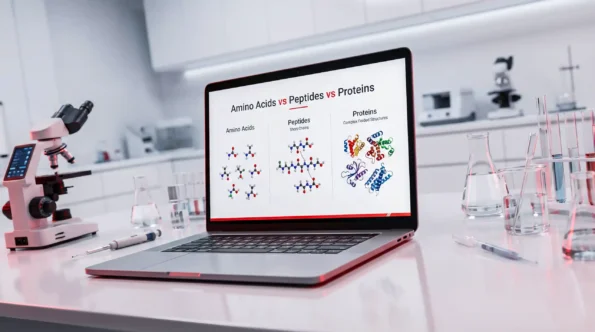
Peptides vs Proteins vs Amino Acids

Peptides, proteins, and amino acids are the important molecular components of cellular research based systems. They play critical roles in structural organization, signaling pathways, and enzymatic activity across experimental models. However, these three compounds are quite different from each other in terms of their molecular structure and properties. The primary difference between these compounds is […]

CONTINUE READING ➞
Close My Cart
Close Wishlist
Recently Viewed Close
Close

Close
Navigation
Categories
Newsletter

Newsletter

Be the first to know about our new arrivals, exclusive offers and the latest Compounds update.